Image credit: Medieval Pattern Poem, 9th Century. Rabanus Maurus. The Public Domain Review.
Debride the wound, use your ice cube trays to rebuild the glaciers, keep joy to hand.
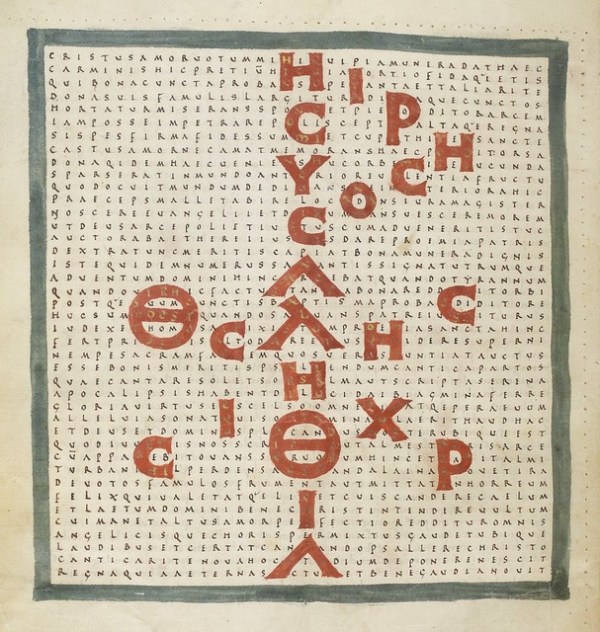
Image credit: Medieval Pattern Poem, 9th Century. Rabanus Maurus. The Public Domain Review.
What constitutes enough? The Old Oak looks frail and young ones will, now, never get that old. The earth shivers with plastic. Stars in their remoteness no longer render me small and solidly placed. Over the ocean, over Lake Michigan, I looked to the horizon until Infinity erupted in a lick of methane vapor. Now, I have cut grass, cello, wind, thoughts, you, words.
I go granular. I find significance, beauty, in descriptions of the ugliness, in enactments through words that articulate vibrantly, viciously in their accuracy and relentlessness.
Lucy Brock-Broido’s poetry enacts beauty via this kind of paradox. Her books contain “an ineradicable appetite for the new, but also for the void…grief that acts out forever, that will not end,” says the Paris Review. Here is Brock-Broido reading “Periodic Table of Ethereal Elements.”
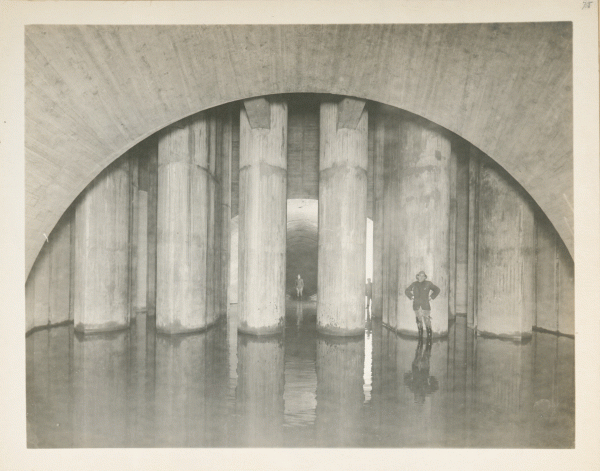
Image credit: "Kensico Screen Chamber...Contract 55." Science, Industry and Business Library. NYPL Digital Collections, 1918.
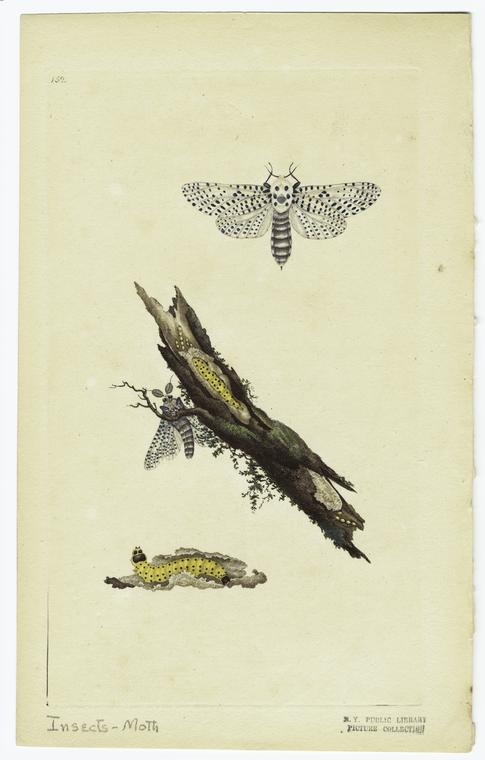
Image credit: "Caterpillar In Tree Branch, Moth On Branch, Etc." NYPL Art and Picture Collection. Date unknown.
Help the stranger, not because of who they are, but because of who you are. Friends and Jewish leaders have said we where I said you, and I do not know which group would claim me, so I said you so I would hear. “I took a deep breath and listened to the old brag of my heart. I am, I am, I am,” wrote Sylvia Plath. A friend who shares this week of my birthday thought I am, I am, I am beside the ocean as a gift.
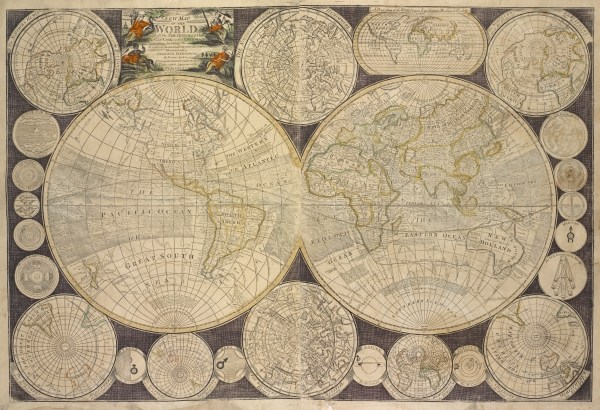
Image credit: "New map of the world with all the new discoveries," Lionel Pincus and Princess Firyal Map Division, NYPL Digital Collections, 1798.
On the body, through the body, because of the body, in spite of the body, and at the body’s expense: Dr. Ford’s body has been the locus of violence and of public discourse about its own validity, and today her body was on trial. It was called on to be proof of itself. So many feel entitled to her body–to having her perform recitation of its encounters, justification of its whereabouts and state of sobriety. They expect her body to remember now, expect her body to have been clear enough years ago that, even if his body were not clear enough, weren’t listening, or just didn’t care, her body could have–should have–stopped his. These are all points others have discussed more articulately.
It is reductive to speak of Dr. Ford’s totality as a body, and the body is also the flesh and bone vehicle of experience, and, in that, it is everything.
We all had feelings about watching her body today, watching her body perform the act of remembering and not just remembering, recounting, and recounting so as to be believed–performing according to the parameters a public domain sets forth. She did well. I was pleased she was so articulate, and my pleasure belied that I had expectations of her. We availed ourselves of her body in this witnessing whether to lend her support or root for the laughing men in the room. Even though she was articulate, I couldn’t bear to watch today. I tuned out early. I don’t mean this was the morally better thing to do but rather to point out that, in all of our responses, her body endured machinations it shouldn’t have had to–reduction, command performance, flesh and bone sensation–and we all felt this violence, even and maybe especially those laughing goons.
Is her body pretty enough to have been raped? The pervasiveness of this logic, even in news stories supposedly in support of her, is something I haven’t seen discussed. Several newspapers, supposedly to support her, show her when she was younger and dressed to look feminine and polished. I haven’t seen many goofy or dorky images of her in high school, and I am sure there were some as there are of all of us. This curation of images by supposedly on-her-side media implicitly suggests that her prettiness makes her story believable. However, also implicit in this logic is the idea that it is believable because the rape seems more likely to have happened, and “seems” is the problem. “Oh, she was hot. I get it now.” That’s the logic. Or maybe “she was hotter than him or at least as hot as him.” One must do the math. One must calculate Her Body vs. His Body. Yet, if she were pretty enough (whatever that means) then it becomes somehow understandable and there is only a short slip to acceptable from there. This discourse has played out on her body, at her expense and at ours.
I have found some antidote in these writers’ compassion and fierce acumen:
“Carelessness does not make sexual assault an expected outcome…” From “The Times I wasn’t Raped” by Zoe Zolbrod.
“No one really believes this woman is lying. If they vote him in: It is because they believe her and don’t care. We should stop saying believe. It’s not about that anymore. It is about whether or not they care.” From Twitter thread by author Glennon Doyle on today’s “trial”
“They Don’t Want to know: Rebecca Solnit on Brett Kavanaugh and the Denial of Old White Men”
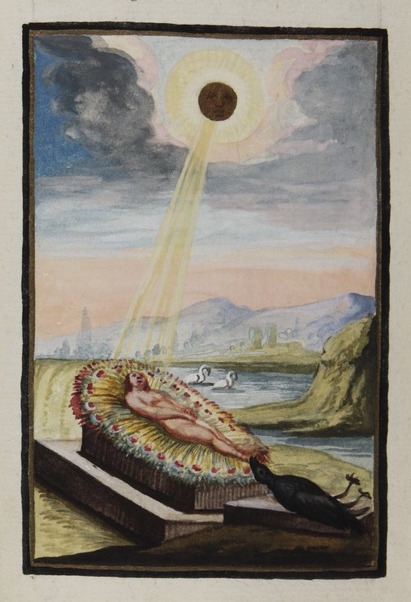
Image credit: From Compendiolum de praeparatione auri potabilis veri, attributed to M[arcus] E[ugenius] Bonacina, ca. 1790 accessed via Public Domain Review's collection, The Surreal Art of Alchemical Diagrams.
.
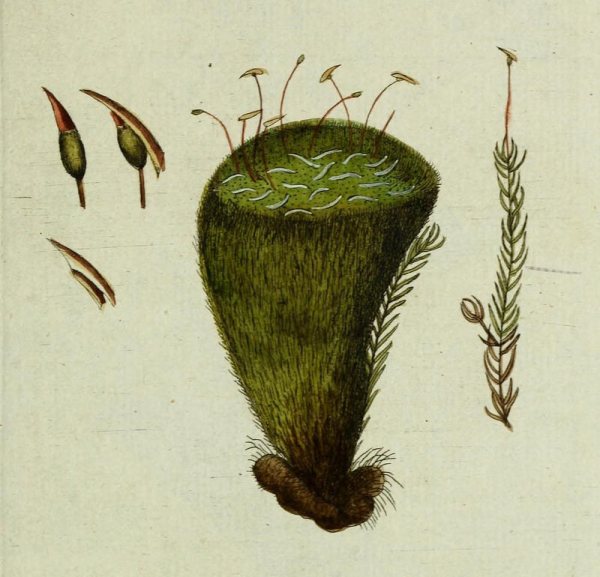
The practice of finding joy has eluded me for a few months now. I continue to get deep satisfaction from writing poetry before work and from reading Little Gorilla to, or finding the gorilla in the ears of, my children. I have to keep my focus tight, though. I have to focus for fear this pleasure will connect, as thoughts do, to ideas, feelings and things beyond it. I can’t look out the window at the sap-split maple blossoming because potential climate wars make me want to build a higher fence between the tree and the sidewalk. Then, I wonder if the moss in the Ho Rainforest is already drying out. I research and learn that moss changes shape in response to high air pollution, which simultaneously amuses and saddens me.
Lichen from hundred-year-old Douglas firs litters the grass in our neighborhood park. When we pass through on a walk with our dog, I take a piece of lichen with me. I think of Ho and cup my hands around this Parmelia sulcata, this symbiotic merge of algae and bacteria, and breathe in. I want to remember the sopping green. I want to remember air so thick with clean it almost had a mouthfeel. And as I feel the sadness-part of longing point over there to absence and then point out to a future of questionable green and air quality, I discover the smell’s intensity. It overwhelms me. I cannot actually escape the sopping green of it. It is here right now. In Ho, I thought the smell was the trees, the old growth Sitka Spruce and Western Hemlock, and maybe the hip-tall ferns or verdant moss filtering, cleansing and reinventing the air into aura. But as I fill my palms with my warm breath, I discover it was the lichen all along. I breathe out and the lichen breathes back the forest. I breathe out and then breathe in quickly to catch another lichen breath, an absolute potent green from the small cup of my hands.
Image credit: Illustration of the moss Bryum Glaucum, from Plantarum indigenarum et exoticarum icones (1788)
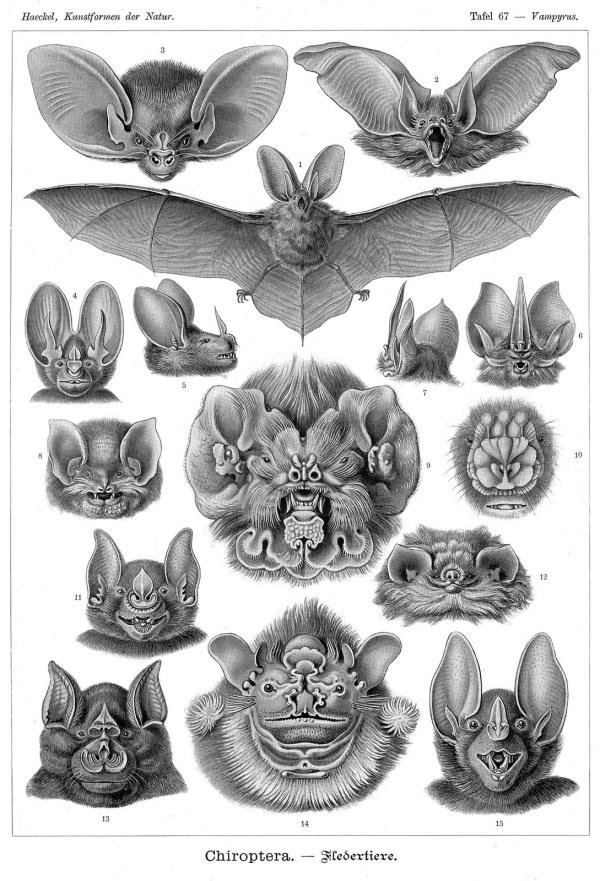
Image credit: Illustration from Ernst Haeckl's Kunstformen der Natur, 1904,the Public Domain Review.
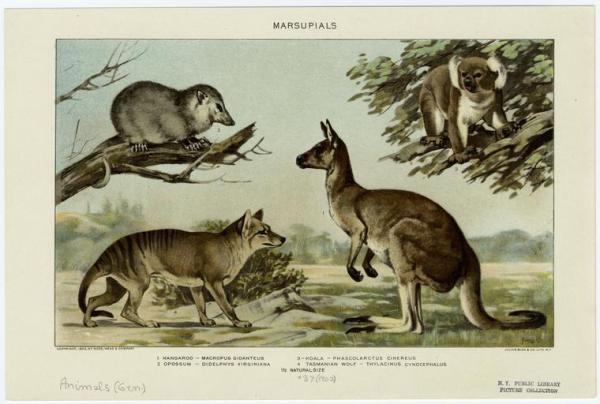
Every week or so I get an Instagram post from Kangaroo Sanctuary in Mparntwe, Australia. Kangaroos are playful, smelly, smart, violent, loving, creative beings I love to watch. I am linking to a video here because it is incredible to see these dozens of kangaroos moving through wide open desert on their morning walk, but once you’ve watched it, you might want to listen to it. It is the lack of mechanized sound that struck me: wind, the persistent rustle of tall scrub, thumps on thick bare dirt, a bird call now and then. It is the rare, reassuring sound of undeveloped planet and cared-for beasts.
Image credit: "Marsupials," Art and Picture Collection, The New York Public Library Digital Collections. 1902.

John Cage described his album Bird Cage as “a space in which people are free to move and birds to fly.” He used the I-Ching as a kind of Oulipian composing constraint. Today, I asked the I-Ching how I could best live and write in the world as it was becoming–a much triter question than the ones I imagine Cage asked. I almost asked how I “should” best live because that sounded less selfish. Either way, the question struck me as melodramatic gimcrackery. Then, I asked anyway because I meant it.
I was open to big swipes like: stop writing and focus on your children, or become a therapist so you do some more directly significant good, or move to the Olympic Peninsula because there will be clean air there ten years from now. I was open to small suggestions like: listen to the jackhammer in the distance then listen to your pen on the paper in front of you.
But, the I-Ching sent me to the gua, Pi, which means hindrance. The gua’s ideograph (line-drawing-like picture) was a bird flying under heaven because heaven and earth were not working well together, or rather, “Heaven and Earth Falling apart.” Fanfuckingtastic. It did emphasize that hindrance and advancing are two parts of a cycle, but it more or less told me to stay put and cross my fingers.
With fingers crossed, I am determined to reconnect to the world in which I am staying put. My new plan is to take time to attend to every sense. Today, I’ll deal with my ears. In grad school, I napped to the album, Colleen et les Boîtes à Musique, which always reminded me of birds. Right now, I am writing to it and/or contentedly staring out the window. I would love to hear about sounds that engage you, especially if they are a little unexpected.
And also, here’s some John Cage.
Image credit: "Greenfinch-Canary Mule," George Arents Collection, The New York Public Library Digital Collections.
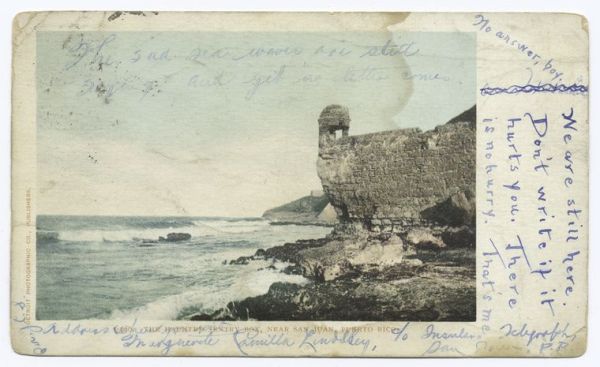
No answer, boy. Puerto Rico, mass murder and my lovely friend Julie offers on social media, “Does anyone need a direct dose of compassion and support today?” I remember that this still happens in the world, too. We are still here.
Image credit: "The Haunted Sentry Box, San Juan, P. R." The Miriam and Ira D. Wallach Division of Art, Prints and Photographs: Photography Collection, The New York Public Library Digital Collections. 1898 - 1931.
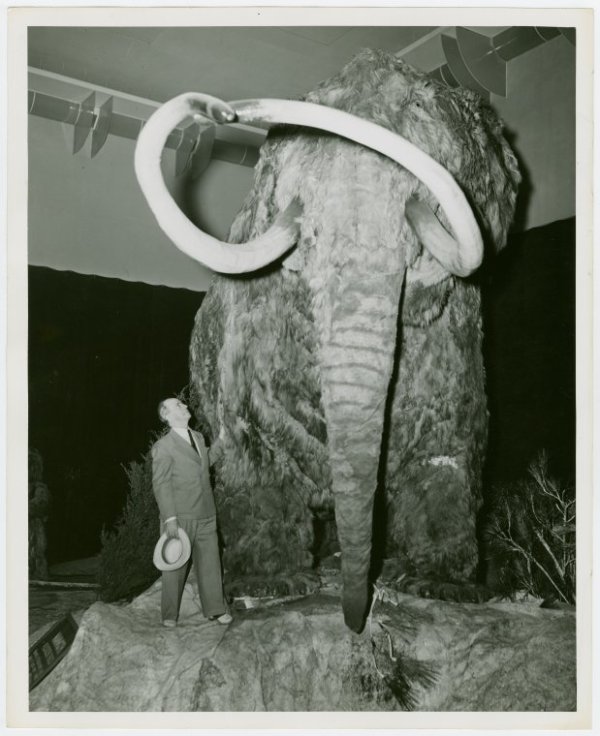
According to Ice Age ecologist Jacquelyn Gill, you have probably drunk mammoth pee. Thank you, Earth’s reclamation system. Dr. Gill cohosts a podcast called Warm Regards which focuses on the warming planet.
Image credit: "New York Zoological Society - Man next to wooly mammoth in exhibit," Manuscripts and Archives Division: The New York Public Library Digital Collections. 1935 - 1945.
Yesterday, I did not spend the little free time I had on breathing exercises or reading or moving my atrophying body to do anything but clench. I need to disconnect sometimes (wine, tv), but these days the work is to connect more than to numb.
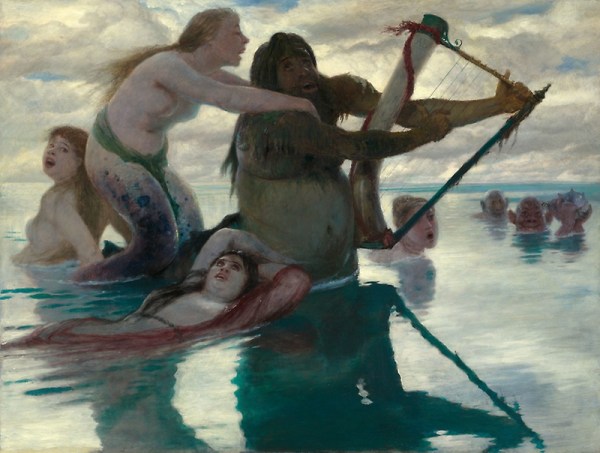
So, today I looked back at one of my favorite paintings, In the Sea by Arnold Böcklin. It’s at the Art Institute of Chicago, so I got to spend some time with it when I worked with paintings there. I never got to clean it, though. It’s not super well done, but it makes me earnestly, gleefully laugh. Böcklin painted alongside the Impressionists, but this is a Renaissance-art-looking monsters’ day at the beach. It’s all these mythical creatures listening to conch shells, floating, and hanging out with sand in their shorts.
Speaking of joy and other romantic, heavy-handed, sentimental terms, coming at tropes, clichés, and stereotypes from a slant can make them less sentimental, less heavy-handed. It can render familiar things anew and revitalize the sentiment for which cliché itself is often shorthand. Defamiliarize and revitalize: that’s what I want to do with posts here. I want to get to a granular level of joy. I don’t want to describe joy. I want to enact it. I won’t say it was a beautiful spring morning. I’ll tell you what I did and thought and maybe you’ll discuss those things with me and we can joy together.
The title of this post is the name of a creative writing class I took with Leni Zumas. If you haven’t read her work, she is an expert at defamiliarization. The title story in Farewell Navigator starts, “We live with the lights off in a rot-walled house.” I plan to read her newest novel, Red Clocks, as soon as it comes out and would love to discuss it. Just let me know if anyone would be into reading it together bookclub-like.
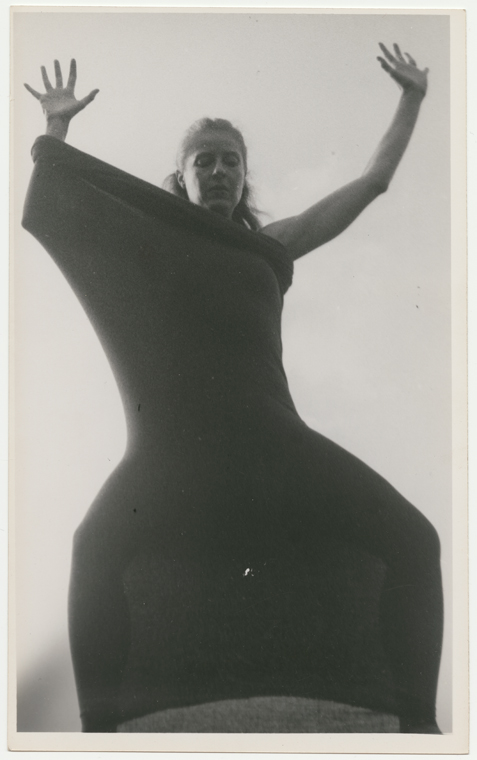
Image credit: Jerome Robbins Dance Division "Photograph of Litz dancing The Glyph at Black Mountain College" The New York Public Library Digital Collections.
My small goal today was to take a 1/2 hour to connect to the world in ways that brought me joy instead of fear, disgust, defeat, and and and. So, I reread Donald Justice’s “Southern Gothic” and I am listening to Dollar Brand & Abdullah Ibrahim Orchestra’s African Space Program (and wow). I am happy to report the joy is still there.
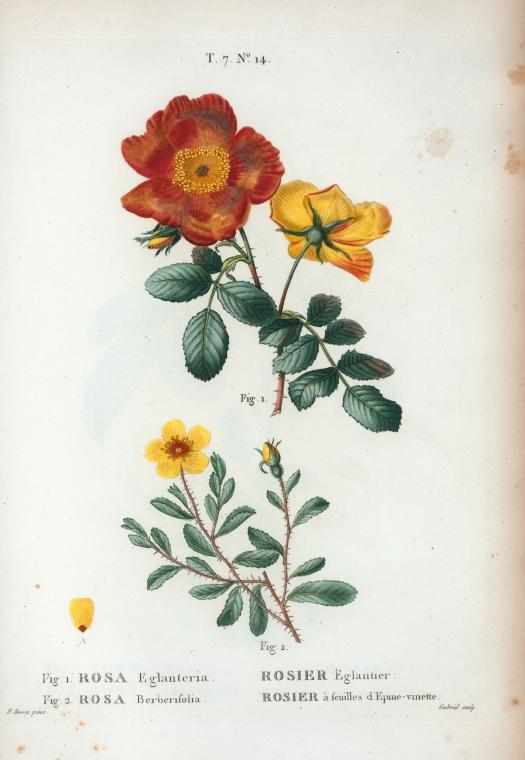
Image credit: Rare Book Division, "Fig. 1. Rosa Eglanteria = Rosier Eglantier. Fig. 2. Rosa Berberifolia. [Eglantine, Sweetbrier Rose - Rose single]" The New York Public Library Digital Collections. 1801 - 1819.
Keep some joy close to the surface so you can find it ever again. Don’t let it sink. Don’t let the handle rust, the crumb lose definition in that swell of bad news. Don’t nestle it in barbs, in fishnchips newspaper neglected so long the smell is neutral. Don’t attend to that and not this. This will bury itself a little deeper with every mudslide. Unattended, it will petrify, camouflaged the color of stuck, or evaporate over weeks without even a lick of steam. The planet is troubled. Douse the fire, debride the wound, use your ice cube trays to rebuild what you can of the glaciers, and keep joy available by searching for it now and then. Practice so you remember how to find it, where to even look.
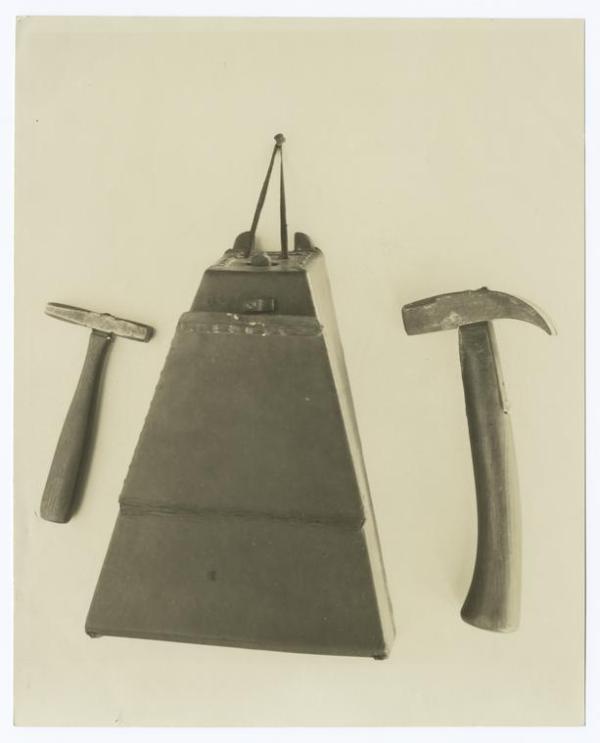
Image credit: "Cobbler's tools, Deerfield, Mass.," The Miriam and Ira D. Wallach Division of Art, Prints and Photographs: Photography Collection, New York Public Library Digital Collections 1860 - 1920.
 Close to the Surface