The practice of finding joy has eluded me for a few months now. I continue to get deep satisfaction from writing poetry before work and from reading Little Gorilla to, or finding the gorilla in the ears of, my children. I have to keep my focus tight, though. I have to focus for fear this pleasure will connect, as thoughts do, to ideas, feelings and things beyond it. I can’t look out the window at the sap-split maple blossoming because potential climate wars make me want to build a higher fence between the tree and the sidewalk. Then, I wonder if the moss in the Ho Rainforest is already drying out. I research and learn that moss changes shape in response to high air pollution, which simultaneously amuses and saddens me.
Lichen from hundred-year-old Douglas firs litters the grass in our neighborhood park. When we pass through on a walk with our dog, I take a piece of lichen with me. I think of Ho and cup my hands around this Parmelia sulcata, this symbiotic merge of algae and bacteria, and breathe in. I want to remember the sopping green. I want to remember air so thick with clean it almost had a mouthfeel. And as I feel the sadness-part of longing point over there to absence and then point out to a future of questionable green and air quality, I discover the smell’s intensity. It overwhelms me. I cannot actually escape the sopping green of it. It is here right now. In Ho, I thought the smell was the trees, the old growth Sitka Spruce and Western Hemlock, and maybe the hip-tall ferns or verdant moss filtering, cleansing and reinventing the air into aura. But as I fill my palms with my warm breath, I discover it was the lichen all along. I breathe out and the lichen breathes back the forest. I breathe out and then breathe in quickly to catch another lichen breath, an absolute potent green from the small cup of my hands.
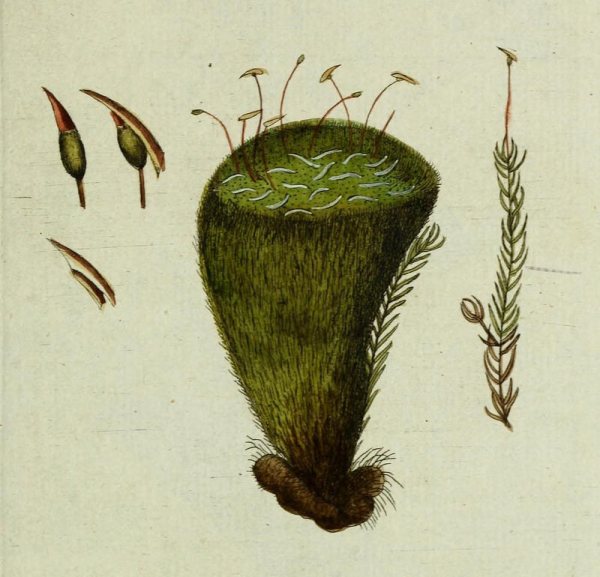
Image credit: Illustration of the moss Bryum Glaucum, from Plantarum indigenarum et exoticarum icones (1788)
 Close to the Surface